
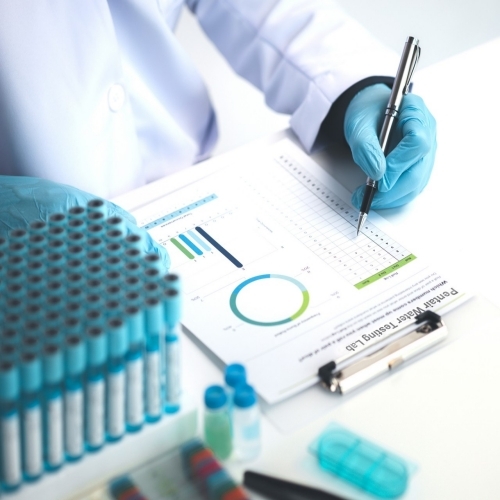
When it comes to running a business, you may already have a preventive maintenance checklist: building checks, equipment inspections, fire systems, and raw material stocks. However, many businesses forget one thing that flows every day and affects almost all operationalprocesses-water quality.
In fact, Everpure from Pentair Water Solutions recommends testing water at least once per year to maintain optimal quality, because the condition of the water source can change at any time.
The good news: once you have the test data, you can choose the right filtration system-not “approximately”-and that’s the most cost-effective way to maintain taste while extending the life of the machine.
Also read:
Why Water Testing is a “Business” (Not Just Technical) Must
1) Taste & consistency of finished products stabilize
Water affects the flavor of beverages and food-especially coffee, tea, ice, and soupy menus. Problems that often occur:
- Chlorine/chloramine → “chlorine-rich/pond” aftertaste
- Organic compounds/algae → “earthy” nuances
- Metals (e.g. Fe/Mn) → metallic taste, ice and glass stains
If your business relies on repeat orders for consistent taste, water quality is part of the product standard-not a minor detail.
2) Longer machine life, less downtime
Hard water, sediment, and chemical contaminants accelerate:
- scaling in espresso/steamer boilers,
- scale and decreased ice machine performance,
- dead-end nozzles,
- valve/pipe corrosion.
The end result: more frequent servicing, downtime disrupting operating hours, and increased component costs.
3) Food safety: microbiology is “non-negotiable”
Microbiological parameters such as E. coli and total coliform must be zero for water used in the context of consumption/products, due to the risk of fecal contamination.
Frequent Contaminants in Foodservice
Some categories of frequent concerns in foodservice: bacteria, cysts, chloramines, viruses, PFAS, microplastics. (This list is also referred to as common contaminants in foodservice environments by Pentair/Everpure.)
Mandatory Parameters You Should Check
Referring to Permenkes No. 2 Year 2023, parameters that are often relevant for foodservice operations include:
Microbiology (mandatory):
- Escherichia coli = 0 CFU/100 mL
- Total Coliform = 0 CFU/100 mL
Physical (example):
- Temperature: air temperature ± 3°C
- TDS: < 300 mg/L
(For turbidity < 3 NTU, color 10 TCU, odorless smell-generally used as operational quality control as well. )
Chemical (which is often “hit” in the field):
- pH: 6,5 - 8,5
- Nitrate (NO₃): 20 mg/L
- Nitrite (NO₂): 3 mg/L
- Iron (Fe): 0.2 mg/L
- Manganese (Mn): 0.1 mg/L
- (And other parameters according to site risk)
Correct Sampling Point
In foodservice, water quality can change after passing through a toren, pipe, or internal treatment. Take samples from at least 3 points:
- Incoming: after the meter/early building entry (before the internal filter)
- Main after-treatment: after filter/softener/RO/UV (if applicable)
- Product critical point:
- drinking & cooking taps
- espresso/coffee brewer line
- ice machine line
- steamer/boiler line
- raw material wash water
Using the Rapid Test “Tool Kit” for Operational Control (Daily/Weekly)
You don’t have to send everything to the lab every time. For routine control:
- TDS meter: detection of supply changes/indication of RO problems
- Test strips/drop tests: pH, hardness, alkalinity, chlorine (free/total)
- Turbidity meter (optional): if there are frequent complaints of cloudy water
Rapid tests are suitable for monitoring trends and early detection, but still require lab testing for microbiology and certain chemical contaminants.
Read also:
When to Lab Test (Prioritize “First Things First”)
For foodservice, I suggest the most realistic order:
- Monthly: microbiology (E. coli & total coliform)
- 6 monthly: basic chemistry panel (pH, nitrate/nitrite, Fe/Mn, etc.)
- Annual: comprehensive test + system review (filter/softener/RO audit)
Pentair/Everpure itself encourages testing at least 1x per year to maintain quality in changing conditions.
The Most Important Part: Once You Have the Data, You Just “Fit” it to the Everpure Solution
This is why Everpure is popular in foodservice: the focus is not just on filtering, but on preserving flavor and protecting equipment.
Pentair explains Everpure helps:
- reduce particles/sediment,
- reduce chlorine and chloramines (which interfere with taste/odor),
- and helps protect equipment from scale/buildup.
Quick decision checklist → Everpure solution direction recommendation
- Water smells of chlorine / taste impairment → focus on carbon filtration (and proper media for chloramines if the utility uses them)
- Severe scalein boiler/steamer → need hardness/scale control (softener or cartridge with scale protection, depending on case & target beverage)
- Cloudy / smelly ice → combination of sediment + carbon, plus ice machine sanitation discipline; scale protection helps maintain ice machine performance
- High Fe/Mn (staining & metallic taste) → need Fe/Mn specific system (this is usually outside the “standard cartridge”, and needs test-based sizing)
- Microbiology issues → corrective measures of sanitization + disinfection; then consider UV (with the prerequisite of low turbidity to be effective)
Quickest way to start (so you end up with the right Everpure)
Pentair/Everpure provides 2 paths that you can replicate as a service flow in your business:
- Submit sample (test kit) → get analysis + Everpure filtration solution recommendation
- On-site survey (expert/total water management) → team comes, tests & surveys the site, then provides recommendations + installation & maintenance direction
If you want a simplified version for operations:
- Start with a quick test (TDS/pH/chlorine) for baseline,
- continue with monthly micro tests,
- then use the results for sizing and selecting the most suitable Everpure system (not overkill, not under-spec).
Brief SOP (You can post it in the Engineering Room)
Foodservice Water Test SOP (Abridged)
- Establish 3 points: incoming, after-treatment, product point (espresso/ice)
- Weekly: measure TDS + pH + chlorine (free/total)
- Monthly: micro lab (E. coli + total coliform)
- 6 monthly: basic chemistry panel
- Any flavor/crust/downtime complaints: rapid test + re-sampling
- Record results in a log (date-time-point-corrective action)
- Read also: Pentair agent in Indonesia
Cover: If you want “immediate” results
If your goal is consistent taste + safe machine + lower maintenance costs, the most effective sequence is:
- Take samples from espresso & ice line points (most sensitive).
- Perform tests (minimum micro + basic chemistry) as a baseline
- Then select and install Everpure systems according to the data-because Everpure is designed to improve beverage/food quality and protect equipment from common problems such as sediment, chlorine/chloramine, and scale.